
Clearer journeys
Navigation, hierarchy and page structure become easier to understand, helping visitors reach the right information with less friction.
An outdated website can cost attention before a visitor ever reaches your offer. ZHOVA redesigns existing websites around clearer structure, stronger UX, responsive design, technical SEO, performance and the goals that matter to the business.
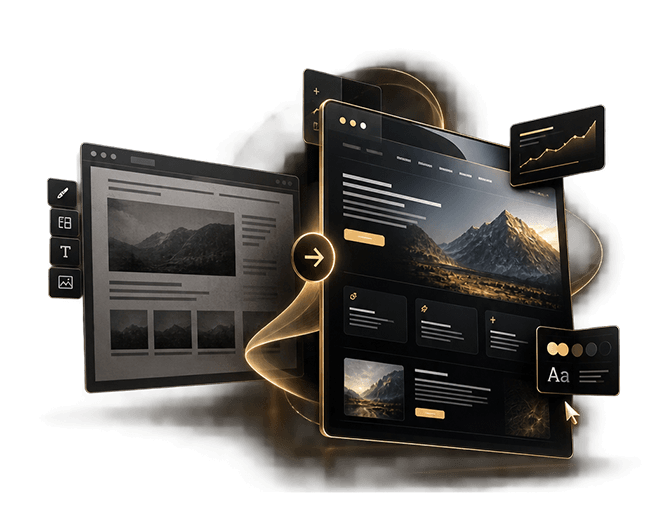
A strong redesign improves the connected system rather than optimizing one visual layer in isolation.
Navigation, hierarchy and page structure become easier to understand, helping visitors reach the right information with less friction.
A contemporary interface makes the quality of the business easier to see and gives the brand a more coherent digital identity.
Content hierarchy, internal linking, metadata and technical foundations are considered as part of the redesign rather than after it.
Layouts, assets, scripts and components can be reconsidered so the redesigned experience has a cleaner technical foundation.
A website redesign touches more than the homepage. We look at the relationships between content, interface, technology and search so the new experience works as one system.
A website redesign can change URLs, navigation, headings, copy and templates. Those changes need to be managed deliberately. We treat search visibility as part of the redesign architecture, not a post-launch patch.
Explore SEO ↗Review UX, content, structure, technical issues, SEO signals and performance.
Define priorities, audience journeys, content intent and redesign direction.
Rework information architecture, navigation, page relationships and hierarchy.
Create a distinctive responsive visual system built around the new structure.
Implement the approved experience with clean, maintainable and SEO-aware development.
Test redirects, devices, usability, technical SEO and performance before release.
A redesign is worth considering when the website no longer reflects the business, creates UX friction, performs poorly on mobile, has outdated structure, or makes it difficult for users and search engines to understand important content.
It can if structural changes are made without planning. A careful redesign should account for existing URLs, redirects, content intent, internal links, metadata, headings, crawlability and other technical SEO considerations.
Yes. The redesign can work with the existing WordPress installation when that is technically sensible, or the implementation can be rebuilt where the current theme, plugins or architecture create unnecessary limitations.
No. A redesign can be full or selective. Sometimes the highest-value work is restructuring navigation, improving key landing pages, modernizing the visual system or fixing mobile and performance issues.
SEO considerations can be integrated into the redesign through information architecture, page intent, heading structure, internal linking, metadata and technical foundations. Ongoing SEO is a separate discipline that can build on that foundation.
Yes. A redesign is often an opportunity to reconsider heavy assets, unnecessary scripts, layout patterns and implementation choices that contribute to a slower experience.
Tell us what feels outdated, what is not working and where the current website needs to go next.
Start your redesign ↗